
PFCS INSIGHTS · SEPTEMBER 20, 2026
Environmental Due Diligence for Commercial Real Estate Loans
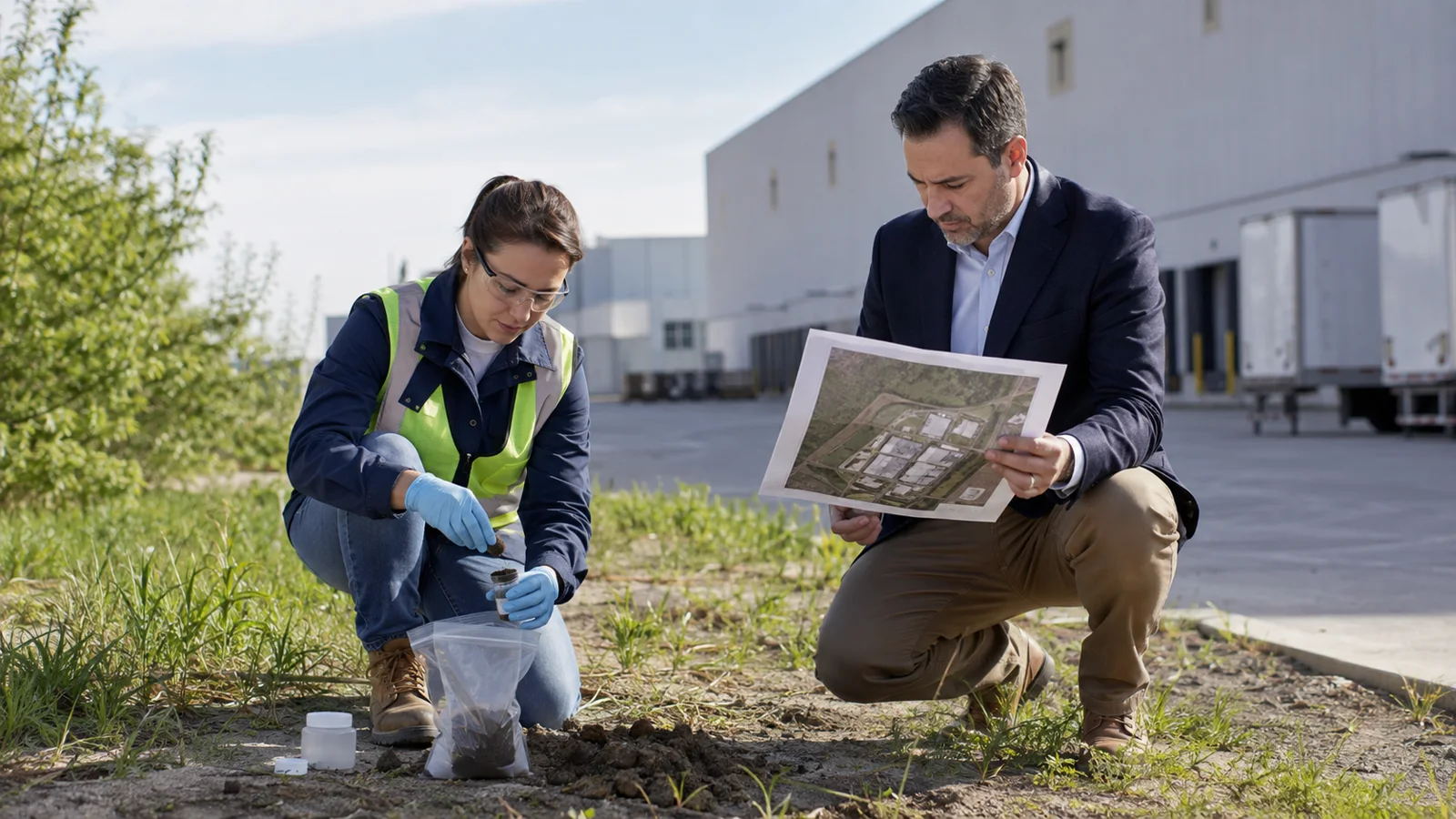
Environmental due diligence can affect whether a commercial property is acceptable collateral, how a lender structures the loan, and whether the buyer has enough time and contractual protection to investigate a concern. The process is not limited to obviously industrial sites: historical operations, neighboring uses, storage tanks, fill, dry cleaning, vehicle service, agricultural chemicals, or incomplete records can create questions long after an activity ends. Borrowers should start early, use qualified professionals accepted by the prospective lender, and keep environmental findings separate from assumptions about legal liability or loan approval. This guide is educational, not environmental, engineering, legal, insurance, or financial advice; the lender, environmental professional, counsel, insurer, and relevant agencies determine transaction-specific requirements.
01
Why environmental review enters commercial underwriting
A lender evaluates the property as collateral and may require environmental review before closing, funding, or accepting a guaranty or indemnity structure. The review can identify conditions that affect value, marketability, use, operating cost, cleanup exposure, construction, insurance, or future refinance. A clean operating history should not be assumed from the property’s current appearance. Begin by asking the lender which report, provider qualifications, reliance language, report age, property scope, and follow-up process apply to the proposed loan.
02
Define the property and transaction before ordering work
Confirm the legal parcels, street addresses, acreage, improvements, easements, adjoining areas, current and planned uses, acquisition or refinance structure, construction scope, and parties that need to rely on the report. Reconcile the site description to the purchase agreement, title commitment, survey, appraisal order, leases, and loan application. An omitted parcel, outbuilding, former operating area, or off-site access route can make an otherwise timely report incomplete for the lender’s purpose.
- Requested amount and use of proceeds
- Historical and current financial statements
- Complete debt and ownership schedules
- Collateral and transaction documentation
- 01Investigate the complete site
- 02Escalate findings deliberately
- 03Protect the closing timeline
03
Build a useful site-history file
Gather prior environmental reports, property-condition reports, surveys, title materials, regulatory correspondence, permits, spill records, tank records, waste manifests, remediation documents, closure letters, insurance information, and available records of former owners, tenants, or operations. Identify historical uses such as fueling, dry cleaning, automotive repair, printing, manufacturing, plating, waste handling, chemical storage, or intensive agriculture. Disclose known information to the qualified professionals and counsel rather than expecting a records search to reconstruct every fact.
04
Understand what a Phase I review can and cannot do
A Phase I environmental site assessment generally combines records research, a site visit, interviews, and professional analysis to identify environmental concerns under the applicable scope of work. It is not the same as laboratory sampling, a property-condition assessment, an asbestos survey, a wetland study, or a guarantee that no contamination exists. The environmental professional—not the borrower—classifies observations and recommends next steps. Read the full report, including limitations, data gaps, reliance provisions, and the exact property covered.
05
Treat targeted follow-up as a decision process
If the initial review identifies a condition requiring further evaluation, the next step may involve additional records, interviews, agency files, specialist review, or targeted sampling and testing. Scope should be developed by qualified professionals in coordination with the lender and counsel. Before authorizing intrusive work, confirm property access, owner consent, restoration obligations, insurance, confidentiality, notice requirements, sample locations, analytes, schedule, and who receives the results. Testing should answer defined questions rather than produce data without a transaction plan.
06
Connect findings to structure, cost, and closing decisions
An environmental finding does not lead to one automatic outcome. Depending on severity, certainty, law, lender policy, and transaction terms, parties may consider additional diligence, remediation, monitoring, agency coordination, price adjustment, escrow, reserve, indemnity, insurance, closing condition, delayed closing, alternative collateral, or withdrawal. Estimate both immediate and continuing costs, including consultant work, legal review, access, remediation, reporting, operations, and future monitoring. Do not treat an indemnity or insurance policy as a substitute for understanding exclusions, counterparty strength, and lender acceptance.
07
Control timing across contracts and the loan process
Environmental work can depend on site access, historical files, agency response times, laboratory capacity, weather, tenant coordination, and lender review. Map the diligence period, financing contingency, report delivery, follow-up decision, cure rights, notice deadlines, deposit risk, loan-commitment expiration, and closing date on one calendar. Order only after confirming scope and reliance requirements, but early enough to preserve contractual choices. Keep a log of requests, access approvals, report drafts, open questions, decisions, and written lender responses.
08
Prepare a lender-ready environmental package
Provide the lender and approved professionals with the complete property description, transaction structure, intended use, current tenant and operating information, known history, prior reports, regulatory correspondence, and planned construction. Separate verified facts from owner statements and estimates. Track every recommendation and lender condition to a responsible party, supporting document, due date, and resolution. PFCS can help coordinate the financing file and timeline, but environmental conclusions, legal responsibility, insurance coverage, loan approval, and final conditions remain with the qualified parties and the prospective lender.
05
Financial Comparison and Underwriting View
| Review area | What a lender may evaluate | Practical borrower action |
|---|---|---|
| Cash flow | Historical and projected ability to service debt | Use reconciled statements and explain adjustments |
| Leverage | Debt relative to value or capitalization | Test proceeds under conservative values |
| Liquidity | Capacity to absorb delays and volatility | Document verified post-closing liquidity |
| Execution | Experience, documents, and transaction readiness | Resolve missing reports before submission |
Related PFCS Guidance
Explore PFCS guidance for commercial real estate financing, review business growth financing options, or learn how SBA loan coordination may fit an eligible transaction.
PFCS provides independent, borrower-first transaction analysis, underwriting coordination, and customized capital solutions sourced from third-party lenders.
Contact PFCS about your financing need →06
Frequently Asked Questions
Does PFCS provide loans directly?+
No. PFCS is an independent commercial finance consulting and brokerage firm that coordinates requests with third-party lenders.
Does submitting information guarantee financing?+
No. Approval, pricing, structure, timing, and funding remain subject to lender underwriting, eligibility, documentation, and final approval.
What documents should a borrower prepare first?+
Most reviews begin with a financing summary, recent financial statements, tax returns, debt schedules, ownership information, and transaction-specific documents.
Can lender requirements change?+
Yes. Requirements, programs, pricing, and credit criteria can change and may vary by lender and transaction.
Educational information only; not financial, legal, tax, or investment advice. PFCS is not a bank or direct lender. Financing is subject to third-party lender underwriting, eligibility, approval, documentation, and applicable law.