
PFCS INSIGHTS · SEPTEMBER 22, 2026
Property Condition Assessments for Commercial Real Estate Loans: A Borrower’s Guide
A property condition assessment can turn a walk-through and document review into a financing issue long before a roof leaks or a major system fails. Commercial real estate lenders may use the report to understand immediate repairs, deferred maintenance, life-safety concerns, major systems, and probable replacement costs that could affect value, cash flow, reserves, loan proceeds, or closing conditions. A strong borrower does more than order the report: the borrower confirms the lender's scope, provides complete records and access, tests the findings against the business plan, and resolves who will complete and fund each item. This guide is educational, not engineering, architectural, environmental, legal, insurance, appraisal, or financial advice; qualified professionals and the prospective lender determine the transaction-specific requirements.
01
Understand what a property condition assessment does
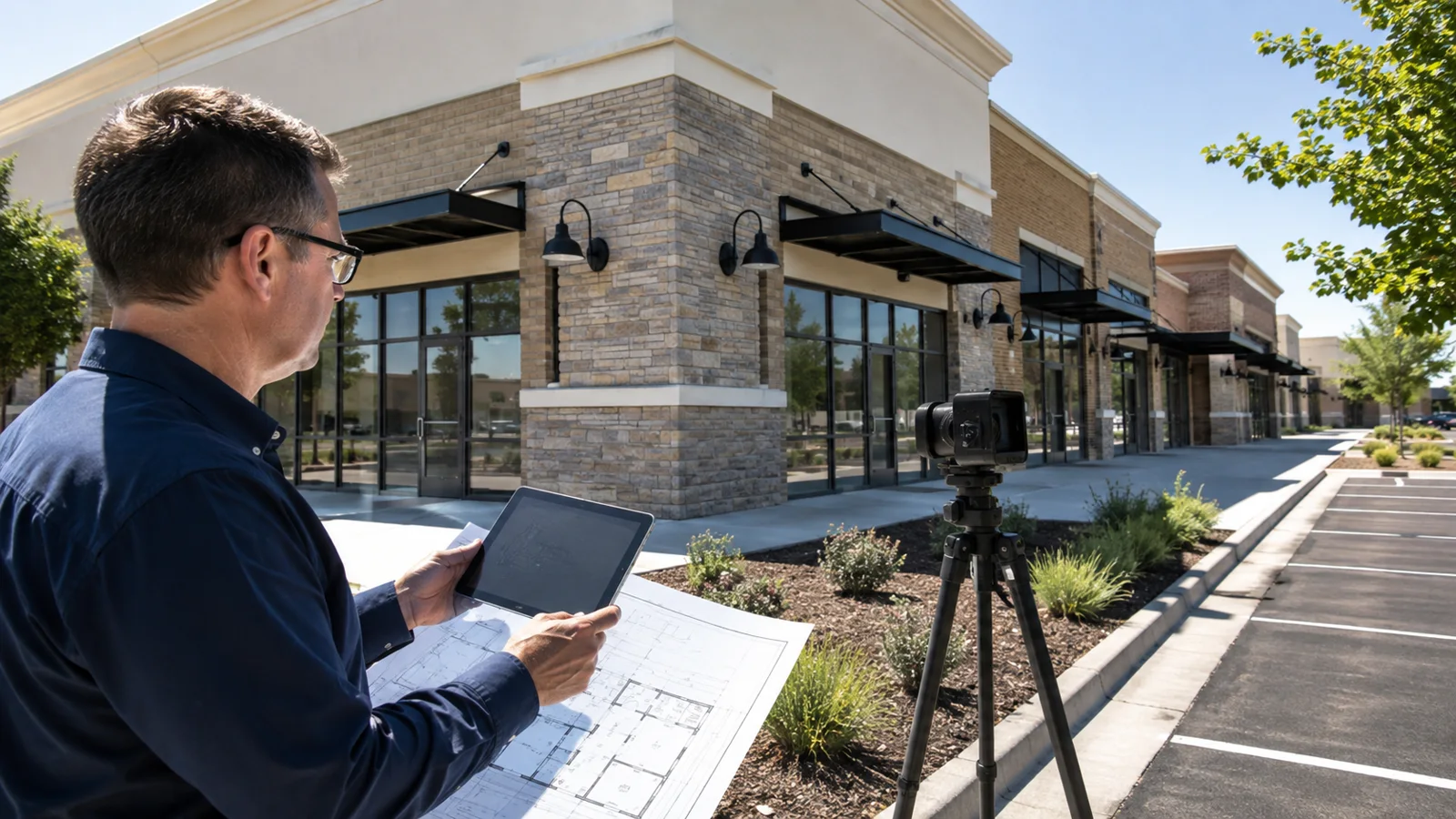
A commercial property condition assessment commonly reviews selected site and building components, records observed deficiencies, identifies immediate or short-term repairs, and estimates probable costs for major replacements over a stated evaluation period. The report is generally based on a defined visual scope, available records, interviews, and professional judgment. It is not a warranty, code-compliance certification, invasive investigation, environmental assessment, appraisal, or guarantee that a component will last until its estimated replacement year. Read the scope, assumptions, exclusions, and limitations before relying on any conclusion.
02
Confirm the lender's scope before ordering
Ask the prospective lender which standard, provider qualifications, reliance language, report age, cost threshold, evaluation period, property systems, and delivery format it requires. Identify whether specialty reviews may be needed for elevators, facades, roofs, parking structures, seismic risk, accessibility, fire and life safety, building envelopes, mechanical systems, or other features. A report prepared for a prior owner or under a narrower scope may be useful background but unacceptable for the new loan. Clarify who may rely on the report and who approves exceptions before authorizing work.
- Requested amount and use of proceeds
- Historical and current financial statements
- Complete debt and ownership schedules
- Collateral and transaction documentation
- 01Inspect the right systems
- 02Quantify timing and cost
- 03Assign every finding
03
Build a complete property record for the consultant
Provide construction and renovation history, plans where available, certificates, prior condition reports, maintenance records, service contracts, warranties, capital budgets, insurance claims, code or fire notices, tenant complaints, utility history, and known repairs. Identify building age, occupancy, recent vacancies, water intrusion, shutdowns, recurring failures, and planned improvements. Missing records do not always stop the assessment, but they can limit conclusions and increase assumptions. Maintain a dated index so the lender and consultant can distinguish verified documents from management recollection.
04
Prepare access and the site visit carefully
Arrange access to representative tenant spaces, vacant areas, roofs, mechanical and electrical rooms, basements, attics, loading areas, parking, site drainage, and secured systems within the agreed scope. Coordinate escorts and tenant notice without directing the consultant away from a concern. Have a knowledgeable property representative available to explain maintenance and operating history. If an area cannot be inspected, document the reason and a plan for follow-up; do not assume an inaccessible component will be treated as satisfactory.
05
Separate immediate repairs from longer-term capital needs
Read each finding for condition, consequence, recommended action, timing, and estimated cost. Immediate or short-term items may involve safety, active leakage, failure, property damage, or a lender-defined threshold. Longer-term items may include roof, paving, HVAC, facade, elevator, electrical, plumbing, and other replacements during the analysis period. Deferred maintenance and capital replacement are not interchangeable: a repair postponed from ordinary operations may signal a current issue, while a sound component can still create a predictable future capital need.
06
Reconcile findings to the budget and loan structure
Create a line-item matrix showing the report reference, responsible party, scope, contractor or professional, current estimate, contingency, funding source, deadline, evidence of completion, and lender disposition. Reconcile the matrix to the acquisition or construction budget, sources and uses, property operating forecast, tenant-improvement obligations, and planned reserves. A lender may require work before closing, an escrow or holdback, ongoing reserves, a completion guaranty, reporting, or another condition. The report does not decide the remedy; the lender, borrower, consultants, counsel, and transaction documents do.
07
Test replacement reserves against actual project risk
Probable-cost tables often use planning assumptions rather than bids, and actual timing or cost can change with design, access, material, labor, permitting, inflation, warranty, tenant operations, and hidden conditions. Compare the consultant's schedule with recent bids, service records, engineering recommendations, lease responsibilities, and management's capital plan. Model how replacements affect net operating income, distributions, debt-service coverage, and liquidity. If the proposed reserve is lower than identified needs, explain the evidence and alternative funding rather than simply deleting the difference.
08
Coordinate the PCA with the rest of due diligence
Compare the property condition report with the appraisal, environmental assessment, survey, title, zoning, accessibility review, insurance, leases, rent roll, inspection notices, and seller representations. One report may flag a feature whose legal, environmental, insurable, or valuation consequence must be addressed elsewhere. Track inconsistent property descriptions, areas, ages, costs, occupancy, and planned improvements to resolution. A repair allowance should not be counted twice, and a problem should not disappear merely because another report did not mention it.
09
Deliver a lender-ready resolution package
Give the lender the final report, exception and repair matrix, bids or professional opinions, revised sources and uses, capital schedule, reserve proposal, completion evidence, and responsible-party confirmations through an approved secure channel. Update the package if a new failure, code notice, tenant event, or cost change occurs before closing. Preserve adequate time for review and follow-up. PFCS can help organize the financing package and coordinate it with third-party capital sources, but the lender and its advisers determine acceptable scope, cost treatment, repairs, reserves, collateral value, approval, pricing, and final terms.
05
Financial Comparison and Underwriting View
| Review area | What a lender may evaluate | Practical borrower action |
|---|---|---|
| Cash flow | Historical and projected ability to service debt | Use reconciled statements and explain adjustments |
| Leverage | Debt relative to value or capitalization | Test proceeds under conservative values |
| Liquidity | Capacity to absorb delays and volatility | Document verified post-closing liquidity |
| Execution | Experience, documents, and transaction readiness | Resolve missing reports before submission |
Related PFCS Guidance
Explore PFCS guidance for commercial real estate financing, review business growth financing options, or learn how SBA loan coordination may fit an eligible transaction.
PFCS provides independent, borrower-first transaction analysis, underwriting coordination, and customized capital solutions sourced from third-party lenders.
Contact PFCS about your financing need →06
Frequently Asked Questions
Does PFCS provide loans directly?+
No. PFCS is an independent commercial finance consulting and brokerage firm that coordinates requests with third-party lenders.
Does submitting information guarantee financing?+
No. Approval, pricing, structure, timing, and funding remain subject to lender underwriting, eligibility, documentation, and final approval.
What documents should a borrower prepare first?+
Most reviews begin with a financing summary, recent financial statements, tax returns, debt schedules, ownership information, and transaction-specific documents.
Can lender requirements change?+
Yes. Requirements, programs, pricing, and credit criteria can change and may vary by lender and transaction.
Educational information only; not financial, legal, tax, or investment advice. PFCS is not a bank or direct lender. Financing is subject to third-party lender underwriting, eligibility, approval, documentation, and applicable law.